
Lead Generation Strategies: A Practical Guide to Attracting and Converting Better Lead
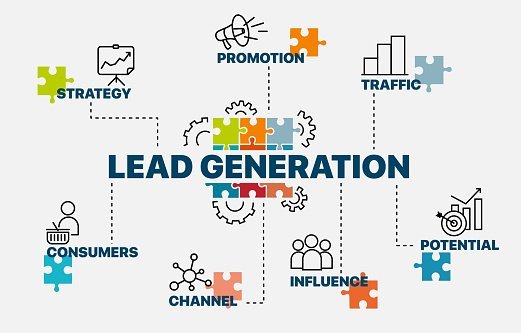
Photo by Priyanka Jain
Lead Generation Strategies: A Practical Guide to Attracting and Converting Better Lead
Every growing business needs customers, but finding the right customers consistently can be challenging. This is where lead generation strategies become essential. Lead generation is the process of attracting potential customers, capturing their interest, and moving them toward a meaningful business conversation or purchase.
For startups and small businesses, effective lead generation can create a predictable path from marketing activity to sales opportunities. For established companies, it can improve customer acquisition, strengthen the sales pipeline, and reduce dependence on random referrals.
Modern lead generation is no longer about collecting as many names, phone numbers, or email addresses as possible. The real objective is to attract relevant, qualified prospects who have a genuine need for your product or service.
A successful strategy combines content marketing, SEO, social media, email marketing, networking, referrals, paid advertising, landing pages, CRM systems, and thoughtful follow-up. The right combination depends on your audience, industry, budget, and sales cycle.
What Is Lead Generation?
Lead generation is the process of identifying and attracting people or businesses that may be interested in your products or services and converting their interest into an identifiable sales opportunity.
A lead could be:
- A visitor who submits a website enquiry.
- A person downloading a business guide.
- A prospect requesting a quotation.
- Someone responding to a LinkedIn post.
- A customer referred by an existing client.
- A business booking a consultation.
- A person signing up for a webinar or newsletter.
The basic journey is:
Awareness → Interest → Lead Capture → Qualification → Nurturing → Conversion → Customer
The objective is not simply to generate leads. It is to generate leads that have commercial potential.
Why Lead Generation Matters for Modern Businesses
Without a consistent lead-generation system, businesses often depend heavily on personal networks, repeat customers, or unpredictable word-of-mouth referrals.
A structured approach can help businesses:
- Build a predictable sales pipeline.
- Reach new customer segments.
- Reduce dependence on one acquisition channel.
- Improve marketing efficiency.
- Identify high-intent prospects.
- Build long-term customer relationships.
- Measure marketing performance.
- Support sustainable business growth.
Importantly, lead generation should connect marketing with sales. A marketing team may generate hundreds of enquiries, but if those prospects are poorly qualified or never followed up, the business may gain little revenue.
10 Effective Lead Generation Strategies
1. Create Valuable Content
Content marketing is one of the strongest foundations for inbound lead generation.
Instead of constantly promoting your product, create useful content that answers the questions your target customers are already asking.
Examples include:
- Educational blog articles.
- Industry reports.
- Case studies.
- Checklists.
- E-books.
- Templates.
- Webinars.
- Short-form videos.
- Business guides.
For example, a financial consulting company could publish an article titled “How Small Businesses Can Improve Cash Flow Management.”
At the end of the article, it could offer a free cash-flow template in exchange for an email address.
The content attracts the audience while the resource creates an opportunity to capture a lead.
2. Use SEO to Capture Search Intent
Search engine optimization can turn your website into a long-term lead-generation asset.
Instead of targeting only broad keywords, focus on search intent.
For example:
- “Digital marketing” → broad informational intent.
- “Digital marketing agency for startups” → commercial intent.
- “Best digital marketing strategy for Indian startups” → problem-solving intent.
Create content around questions, problems, comparisons, and solutions relevant to your target market.
Strong SEO lead generation combines:
- Keyword research.
- Helpful content.
- Internal linking.
- Technical SEO.
- Local SEO where relevant.
- Clear calls-to-action.
- Conversion-focused landing pages.
The objective is not merely higher traffic. It is relevant traffic that can become business opportunities.
3. Build High-Converting Landing Pages
A landing page gives visitors a focused destination for a particular offer.
Instead of sending someone from an advertisement to a generic homepage, send them to a page specifically designed around the campaign.
A strong landing page should contain:
- A clear headline.
- A specific value proposition.
- Short supporting information.
- Trust signals.
- Relevant visuals.
- A simple form.
- One primary call-to-action.
Forms should request only information that is genuinely necessary at that stage of the buying journey. Current marketing guidance also emphasizes reducing unnecessary friction and progressively collecting additional information later.
4. Leverage LinkedIn and Social Media
Social platforms can be powerful lead-generation channels when used strategically.
For B2B businesses, LinkedIn can be particularly useful for reaching:
- Founders.
- Executives.
- Decision-makers.
- Consultants.
- Procurement professionals.
- Industry specialists.
Rather than posting only promotional content, use the 80/20 principle as a practical starting point:
- 80% educational, insightful, or relationship-building content.
- 20% promotional or commercial content.
Share industry insights, practical tips, customer problems, business lessons, case studies, and original perspectives.
A useful LinkedIn post can generate conversations even without directly selling anything.
5. Use Email Marketing and Lead Nurturing
Not every lead is ready to purchase immediately.
Some prospects need:
- More information.
- Proof of results.
- Pricing clarity.
- Internal approval.
- Time to compare alternatives.
This is why lead nurturing matters.
A basic email sequence could be:
- Welcome email.
- Educational resource.
- Problem-solving article.
- Case study.
- Practical recommendation.
- Consultation or sales invitation.
The objective is to remain useful without overwhelming the prospect.
6. Develop a Referral System
Referrals remain one of the most valuable sources of potential business.
Satisfied customers can introduce your company to people who already have some level of trust in the recommendation.
Businesses can encourage referrals through:
- Referral programmes.
- Customer appreciation initiatives.
- Partner networks.
- Professional communities.
- Client testimonials.
- Strategic partnerships.
A simple question such as “Do you know another business that could benefit from this service?” can sometimes open a valuable conversation.
Salesforce also highlights referrals, networking, customer relationships, and becoming a trusted information source among practical approaches to lead generation.
7. Use Webinars, Workshops and Events
Educational events can generate highly relevant leads because participants voluntarily demonstrate interest in a particular topic.
For example, a business consultancy could conduct:
“How Indian SMEs Can Use AI to Improve Business Productivity.”
Participants could register using their name, email address, company name, and business area.
After the event, the company can provide:
- Presentation materials.
- A recording.
- Additional resources.
- A consultation opportunity.
This transforms an educational activity into a structured lead-nurturing process.
8. Invest in Paid Advertising Strategically
Paid advertising can accelerate lead generation, particularly when a business already understands its target audience.
Potential channels include:
- Google Ads.
- LinkedIn Ads.
- Meta Ads.
- YouTube Ads.
- Industry-specific advertising platforms.
However, paid traffic should not be treated as a substitute for strategy.
Before spending money, define:
Audience → Problem → Offer → Landing Page → Follow-up → Conversion
For B2B companies, recent benchmark research shows that lead costs vary significantly by industry and channel, reinforcing the importance of tracking cost per lead (CPL), customer acquisition cost (CAC), lead quality, and revenue, rather than focusing solely on lead volume.
9. Use CRM and Lead Scoring
A CRM helps businesses organize prospect information and track interactions.
Instead of treating every lead equally, introduce lead scoring.
For example:
| Lead Activity | Example Score |
|---|---|
| Downloads a guide | +5 |
| Opens multiple emails | +3 |
| Visits pricing page | +10 |
| Requests consultation | +20 |
| Attends webinar | +8 |
The exact scoring system should be customized to the business.
A prospect requesting a consultation is generally more commercially valuable than someone who simply visited a blog article.
10. Use AI to Improve Lead Generation
AI can support lead generation, but it should enhance human decision-making rather than replace it.
Businesses can use AI for:
- Content ideation.
- Lead qualification.
- Customer segmentation.
- Email personalization.
- Chatbots.
- Data enrichment.
- Predictive analysis.
- Campaign testing.
- Sales follow-up assistance.
The strongest approach is to combine AI efficiency with human expertise.
For example, AI can identify high-intent prospects, while a salesperson handles the relationship-building conversation.
A Step-by-Step Lead Generation Framework
Businesses can build a practical lead-generation system using these seven steps:
Step 1: Define Your Ideal Customer
Identify:
- Industry.
- Location.
- Company size.
- Budget.
- Job role.
- Pain points.
- Buying behaviour.
Step 2: Identify Their Problems
Ask:
What problem makes this customer search for a solution?
Your marketing should address that problem directly.
Step 3: Choose the Right Channels
Select channels based on where your audience actually spends time.
For example:
B2B → LinkedIn + SEO + Email + Webinars
Local services → Google Search + Local SEO + Referrals
Consumer brands → Instagram + YouTube + Paid Social
Step 4: Create a Valuable Offer
Examples:
- Free consultation.
- Business audit.
- Downloadable guide.
- Checklist.
- Calculator.
- Webinar.
- Free assessment.
Step 5: Capture the Lead
Use:
- Landing pages.
- Forms.
- Website CTAs.
- Social lead forms.
- Chatbots.
Step 6: Qualify and Nurture
Separate high-intent prospects from early-stage prospects.
Then provide appropriate follow-up.
Step 7: Measure Revenue, Not Just Leads
Track:
Leads → Qualified Leads → Opportunities → Customers → Revenue
This reveals which channels actually contribute to growth.
Practical Examples
Example 1: A Business Consultancy
Suppose a consultancy wants to attract SME owners.
It publishes:
“10 Business Problems Every Growing SME Should Audit.”
The article promotes a free Business Growth Assessment Checklist.
Visitors submit their email address to receive the checklist.
The consultancy then sends educational emails and offers a consultation.
This creates a simple:
SEO → Content → Lead Magnet → Email Nurturing → Consultation
funnel.
Example 2: A Digital Marketing Agency
An agency could create a free Website SEO Audit.
A prospect enters their website URL and email address.
The agency provides a short audit identifying:
- Technical issues.
- Content gaps.
- SEO opportunities.
- Conversion problems.
The audit demonstrates expertise and creates a natural opening for a business conversation.
Lead Generation Best Practices
A high-quality lead-generation programme should follow these principles:
- Define your Ideal Customer Profile (ICP).
- Focus on lead quality rather than volume.
- Create content around genuine customer problems.
- Match offers with buying-stage intent.
- Keep forms simple.
- Use clear CTAs.
- Follow up quickly.
- Connect marketing and sales data.
- Use CRM automation responsibly.
- Test landing pages and messaging.
- Track CPL and CAC.
- Measure conversion through the entire funnel.
- Build first-party customer data responsibly.
- Continuously improve based on performance.
Modern B2B research increasingly points toward combining SEO, thought leadership, email, webinars, first-party data, CRM integration, and intent-based targeting rather than depending on a single channel.
Common Lead Generation Mistakes to Avoid
Generating Quantity Instead of Quality
Thousands of irrelevant leads are less valuable than a smaller number of qualified prospects.
Having No Clear Offer
“Contact us” is often weaker than a specific offer such as:
“Get Your Free 20-Minute Business Growth Consultation.”
Using the Same Message Everywhere
Different audiences have different problems. Personalize the message according to customer segment and funnel stage.
Ignoring Follow-Up
A lead that receives no meaningful follow-up can quickly become a lost opportunity.
Asking for Too Much Information
Long forms create unnecessary friction. Collect essential information first and gather additional information later when appropriate.
Measuring Only Website Traffic
Traffic is useful, but businesses ultimately need to understand:
Which traffic generates qualified leads and revenue?
Relying Entirely on Paid Advertising
Paid campaigns can generate immediate traffic, but businesses should also build long-term assets such as SEO content, email databases, referrals, and brand authority.
Frequently Asked Questions (FAQs)
1. What is the most effective lead generation strategy?
There is no universal winner. The best strategy depends on the target audience, industry, buying cycle, offer, and budget. A combination of SEO, content, social media, email, referrals, and targeted advertising often provides stronger results than relying on one channel.
2. How can small businesses generate leads with a limited budget?
Small businesses can start with SEO, useful content, LinkedIn networking, referrals, email marketing, local search optimization, partnerships, and educational webinars. These channels can be developed gradually without requiring a large advertising budget.
3. What is a qualified lead?
A qualified lead is a prospect who meets defined criteria such as having a relevant need, appropriate budget, decision-making authority, business fit, or strong buying intent.
4. How does AI help with lead generation?
AI can assist with prospect research, segmentation, personalization, chatbots, content creation, lead scoring, data analysis, and workflow automation. Human oversight remains important for accuracy, trust, and relationship-building.
5. How quickly can lead generation produce results?
Results vary considerably. Paid campaigns can generate enquiries relatively quickly, while SEO, content marketing, referrals, and thought leadership typically require consistent effort over a longer period.
6. What metrics should businesses track?
Important metrics include:
- Lead volume.
- Qualified lead rate.
- Conversion rate.
- Cost per lead.
- Customer acquisition cost.
- Lead-to-customer rate.
- Sales pipeline value.
- Revenue by acquisition channel.
7. Is lead generation only useful for B2B companies?
No. Lead generation is useful for B2B and B2C businesses. The methods may differ, but both models can use content, advertising, social media, websites, email, referrals, and customer data to generate demand.
Conclusion
Effective lead generation strategies are not about chasing every possible prospect. They are about building a repeatable system that attracts the right audience, solves meaningful problems, captures genuine interest, and guides prospects toward becoming customers.
Businesses should begin by clearly defining their ideal customer and understanding their pain points. From there, they can combine content marketing, SEO, landing pages, social media, email nurturing, referrals, events, paid advertising, CRM technology, and AI.
The most important shift is to measure business outcomes rather than vanity metrics. A campaign that produces fewer but better-qualified leads can be more valuable than one generating thousands of low-intent enquiries.
When lead generation becomes a connected process—from first interaction to final sale—it becomes more than a marketing activity. It becomes a strategic growth engine.
Call-to-Action
At Pinehills Business Solutions, we help businesses identify growth opportunities and build practical strategies across business consulting, branding, marketing, digital transformation, AI solutions, and business growth.
If you are looking to attract better prospects, strengthen your marketing system, or create a more scalable path to growth, connect with Pinehills Business Solutions and explore how a structured strategy can move your business forward.