
Marketing Automation Guide: How Businesses Can Automate Marketing and Drive Sustainable Growth
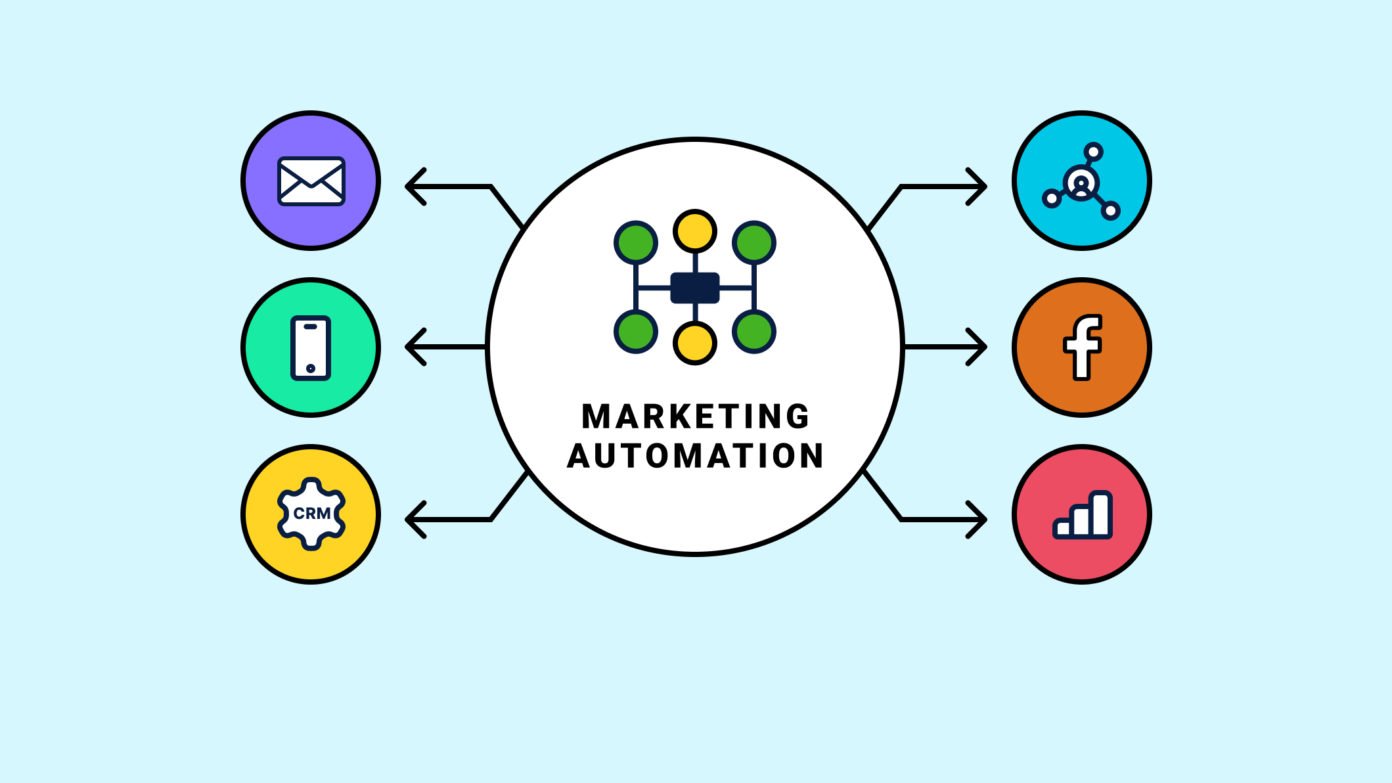
Photo by Nayab Khan –
Marketing Automation Guide: How Businesses Can Automate Marketing and Drive Sustainable Growth
Marketing has become more complex than simply posting on social media or sending promotional emails. Businesses today interact with customers across websites, search engines, email, WhatsApp, social media, and other digital channels. Managing every interaction manually can consume significant time and create inconsistent customer experiences.
This is where marketing automation becomes valuable.
Marketing automation uses technology to automate repetitive marketing activities while allowing businesses to maintain meaningful customer relationships. From automatically sending welcome emails to nurturing leads and following up with potential customers, automation can create a more organised marketing process.
For startups, small businesses, freelancers, and established companies, the objective is not to replace human creativity. It is to reduce repetitive work so teams can focus on strategy, customer relationships, and business growth.
What Is Marketing Automation?
Marketing automation is the use of software and technology to automate repetitive marketing tasks based on predefined rules, customer actions, or business conditions.
Instead of manually performing every activity, businesses create workflows that trigger specific actions.
For example:
Customer submits a website enquiry → CRM records the lead → Welcome email is sent → Follow-up message is scheduled → Sales team receives notification.
Common marketing automation activities include:
- Email marketing
- Lead nurturing
- Customer segmentation
- Social media scheduling
- Website behaviour tracking
- Abandoned-cart reminders
- Customer onboarding
- Lead scoring
- Personalised campaigns
- CRM updates
- Follow-up notifications
The most effective systems combine automation + data + human decision-making.
Why Is Marketing Automation Important?
Manual marketing becomes difficult as a business grows.
A founder may personally respond to every enquiry when there are 10 leads per month. But handling hundreds or thousands of prospects manually can lead to missed opportunities.
Marketing automation helps businesses:
Save Time
Repetitive activities such as sending follow-up emails can happen automatically.
Improve Lead Management
Every lead can enter a structured process instead of depending on someone’s memory.
Increase Consistency
Customers receive timely and consistent communication across their journey.
Support Personalisation
Automation can use customer information and behaviour to deliver more relevant messages.
Improve Productivity
Marketing teams can spend more time on strategy, content, creativity, and customer relationships.
Scale Marketing Operations
A well-designed workflow can handle increasing customer volumes without requiring the same increase in manual effort.
How Does Marketing Automation Work?
Marketing automation generally follows a simple structure:
Trigger → Customer Data → Action → Follow-up → Measurement
1. Trigger
Something happens that starts the workflow.
Examples:
- A customer fills out a form.
- Someone downloads an ebook.
- A visitor signs up for a newsletter.
- A customer purchases a product.
- A prospect clicks an email.
2. Customer Data
The system collects relevant information about the customer or prospect.
This could include:
- Name
- Email address
- Location
- Purchase history
- Website activity
- Content interests
- Lead source
3. Automated Action
The system performs a predefined action.
For example, it may send an email, update a CRM record, assign a lead to a salesperson, or schedule a follow-up.
4. Follow-Up
Additional actions occur based on customer behaviour.
For example:
Email opened → Send educational content
Email ignored → Send a different message later
Demo requested → Notify sales representative
5. Measurement
Businesses analyse performance and improve the workflow.
Important metrics can include:
- Conversion rate
- Click-through rate
- Lead-to-customer rate
- Cost per lead
- Customer acquisition cost
- Engagement rate
- Return on marketing investment
Types of Marketing Automation
Marketing automation can support different stages of the customer journey.
Email Marketing Automation
Businesses can automatically send:
- Welcome emails
- Educational sequences
- Product information
- Event reminders
- Follow-up emails
- Customer feedback requests
For example, an online course provider could send a welcome email immediately after registration and then provide useful learning resources over the following days.
Lead Nurturing Automation
Not every prospect is ready to purchase immediately.
Lead nurturing keeps potential customers engaged through relevant content until they become sales-ready.
A B2B consulting company, for example, could provide a prospect with:
Industry guide → Case study → Educational webinar → Consultation invitation
Social Media Automation
Businesses can schedule social media content in advance.
However, automation should primarily handle publishing and organisation. Genuine engagement, comments, customer conversations, and reputation management should remain human-led.
CRM Automation
CRM automation can help businesses:
- Assign leads
- Update customer records
- Schedule reminders
- Track sales activities
- Notify sales representatives
- Manage customer stages
E-Commerce Automation
Online stores can automate customer communications such as:
- Cart reminders
- Order confirmations
- Product recommendations
- Review requests
- Re-engagement campaigns
How to Build a Marketing Automation Strategy
Automation should not begin with software.
It should begin with a business problem.
Step 1: Identify Repetitive Tasks
List marketing activities that are:
- Repetitive
- Time-consuming
- Rule-based
- Frequently delayed
- Easy to standardise
Start with one or two high-impact processes.
Step 2: Map the Customer Journey
Understand how customers move from awareness to purchase.
A basic journey could be:
Awareness → Interest → Consideration → Purchase → Retention → Advocacy
Identify where customers need communication or support.
Step 3: Define Clear Goals
Do not automate simply because automation is available.
Set measurable objectives such as:
- Increase qualified leads
- Improve follow-up speed
- Reduce manual workload
- Increase conversions
- Improve customer retention
Step 4: Segment Your Audience
Different customers have different needs.
Possible segments include:
- New leads
- Existing customers
- High-value customers
- Inactive customers
- Returning visitors
- Product-specific prospects
Segmentation makes automated communication more relevant.
Step 5: Select Appropriate Technology
Businesses may use combinations of:
- CRM platforms
- Email marketing platforms
- Marketing automation systems
- Analytics tools
- Customer data platforms
- Communication platforms
Choose technology according to business requirements rather than selecting tools simply because they are popular.
Step 6: Build the Workflow
Create simple workflows first.
For example:
Website enquiry → Immediate acknowledgement → Educational email → Sales follow-up → Conversion tracking
Step 7: Test Before Scaling
Check:
- Email timing
- Personalisation
- Links
- Customer data
- Trigger conditions
- Unsubscribe mechanisms
- CRM updates
A small testing group can help identify problems before a campaign is scaled.
Step 8: Measure and Optimise
Automation is not a “set it and forget it” strategy.
Review performance regularly and improve weak points.
Practical Marketing Automation Examples
Example 1: Small Consultancy
Suppose a business consultancy receives enquiries through its website.
A simple automation system could:
- Capture the visitor’s details.
- Add the lead to the CRM.
- Send an acknowledgement email.
- Categorise the enquiry.
- Notify the appropriate team member.
- Send useful educational content.
- Schedule a follow-up.
- Record the final outcome.
This reduces the possibility of leads being forgotten.
Example 2: E-Commerce Business
An online fashion store could create an abandoned-cart workflow.
Customer adds product → Leaves website → Reminder email → Helpful product information → Limited follow-up → Purchase
The communication should provide genuine value rather than repeatedly pressuring the customer.
Example 3: SaaS Company
A software company can automate onboarding.
Free trial begins → Welcome message → Product tutorial → Feature education → Usage-based message → Sales assistance when appropriate
This allows customers to receive guidance without requiring manual communication for every user.
Marketing Automation and AI
Artificial intelligence is increasingly becoming part of modern marketing systems.
AI can support areas such as:
- Content personalisation
- Customer segmentation
- Predictive lead scoring
- Campaign analysis
- Content recommendations
- Conversational experiences
- Customer behaviour analysis
However, AI should complement—not replace—business strategy.
A poorly designed marketing process does not become effective simply because AI is added to it.
The stronger approach is:
Clear strategy → Quality customer data → Automation → AI assistance → Human oversight
Best Practices for Marketing Automation
Follow these principles when building an automation system:
- Start with business objectives, not software.
- Automate repetitive processes first.
- Keep customer communication relevant.
- Use segmentation wherever practical.
- Maintain accurate customer data.
- Personalise messages responsibly.
- Give customers control over communications.
- Monitor campaign performance.
- Test workflows before large-scale deployment.
- Review automated campaigns regularly.
- Keep human involvement in important customer interactions.
- Protect customer information and follow applicable privacy requirements.
Common Marketing Automation Mistakes
Automating Everything
Not every customer interaction should be automated.
Complex complaints, negotiations, and relationship-building often require people.
Sending Too Many Messages
Excessive communication can cause customers to disengage or unsubscribe.
Poor Data Quality
Incorrect or outdated customer information can damage personalisation and customer trust.
Ignoring Customer Intent
Sending the same message to every customer ignores where they are in the buying journey.
Focusing on Vanity Metrics
High email opens or social engagement do not necessarily mean business success.
Focus on meaningful outcomes such as qualified leads, conversions, retention, and revenue contribution.
Forgetting Human Oversight
Automation requires monitoring. Broken workflows, incorrect messages, or inappropriate timing can create poor customer experiences.
Frequently Asked Questions (FAQs)
1. What is marketing automation in simple terms?
Marketing automation means using software to automatically perform repetitive marketing activities based on predefined triggers and customer behaviour.
2. Is marketing automation useful for small businesses?
Yes. Small businesses can use automation to manage leads, follow-ups, email campaigns, customer onboarding, and other repetitive activities with limited resources.
3. Does marketing automation replace marketers?
No. Automation handles repetitive processes, while marketers remain responsible for strategy, creativity, positioning, communication, and decision-making.
4. What is the difference between CRM and marketing automation?
A CRM primarily manages customer and sales information, while marketing automation focuses on automating marketing activities and customer journeys. Many modern platforms combine both capabilities.
5. Is marketing automation expensive?
Costs vary significantly depending on the platform, number of contacts, features, integrations, and business requirements. Businesses should evaluate expected business value rather than choosing solely on price.
6. Can marketing automation use AI?
Yes. AI can enhance automation through segmentation, personalisation, predictive analysis, content assistance, and customer behaviour insights.
7. How long does it take to implement marketing automation?
A simple workflow can potentially be implemented quickly, while a sophisticated system involving CRM integration, multiple channels, data migration, and advanced analytics requires considerably more planning.
Conclusion
Marketing automation is no longer limited to large enterprises with extensive marketing teams. Startups, small businesses, freelancers, consultants, and growing companies can use automation to create more organised and scalable marketing operations.
The key is to avoid automating for the sake of automation.
Successful implementation begins by identifying repetitive problems, understanding the customer journey, defining measurable goals, selecting appropriate technology, building focused workflows, and continuously analysing results.
The most effective marketing automation strategy combines technology with human judgement. When implemented correctly, it can save time, improve lead management, strengthen customer experiences, and create a foundation for sustainable business growth.
Call to Action
At Pinehills Business Solutions, we help businesses identify growth opportunities and build practical solutions across business consulting, branding, digital marketing, digital transformation, AI solutions, and business growth strategy.
Whether you are a startup founder, established business owner, freelancer, or growing organisation, the right strategy and technology can make your business more efficient and competitive.
Connect with Pinehills Business Solutions to explore how smarter marketing, digital transformation, and AI-enabled solutions can support your next stage of growth.