
The Ultimate Guide to Minimum Viable Product (MVP): Build, Validate, and Scale
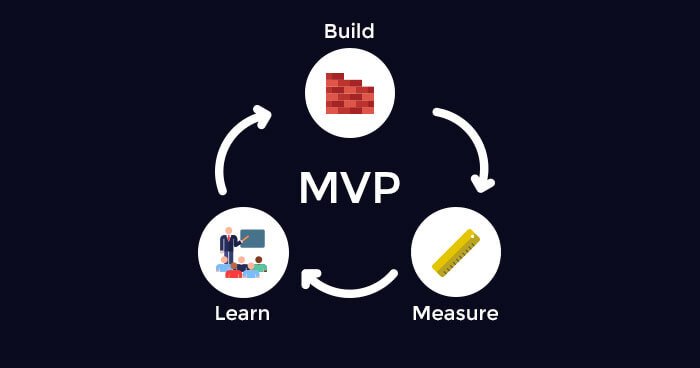
Photo by Arsalan Sajid
The Ultimate Guide to Minimum Viable Product (MVP): Build, Validate, and Scale
Every great business begins with an idea, but jumping straight into full-scale product development without market validation is one of the fastest ways to burn through capital. In today’s fast-paced startup ecosystem, building what you think customers want is a massive gamble. This is where the concept of a Minimum Viable Product (MVP) becomes your greatest strategic asset.
An MVP allows entrepreneurs, business executives, and product developers to test a core hypothesis with the least amount of effort and development cost. Instead of spending months or years building a feature-heavy product, you introduce a simplified version that delivers core value to early adopters. By observing real user behavior, gathering feedback, and iterating rapidly, you mitigate financial risk and ensure your final product aligns with actual market demand.
Main Content
What is a Minimum Viable Product (MVP)?
At its core, a Minimum Viable Product is the foundational version of a new product that allows a team to collect the maximum amount of validated learning about customers with the least effort. Coined by Frank Robinson and popularized by Eric Ries in The Lean Startup, an MVP is not about building a broken or low-quality product. Rather, it is about identifying the absolute core utility that solves a specific user problem and testing it in the real world.
Why Every Startup and Enterprise Needs an MVP
Whether you are an early-stage founder bootstrapping your first venture or an enterprise innovation team launching a new digital service, building an MVP provides critical advantages:
-
Cost Efficiency: Conserve precious capital by avoiding expensive, unvalidated feature development.
-
Faster Time-to-Market: Launch quickly to capture early market attention and establish your brand presence.
-
Validated Learning: Gain real-world insights directly from target users rather than relying on assumptions.
-
Investor Confidence: Presenting a working MVP with traction significantly boosts fundraising potential.
The MVP Development Lifecycle
Building an MVP follows a structured, iterative framework known as the Build-Measure-Learn feedback loop:
-
Define the Problem: Identify the exact pain point your target audience faces.
-
Determine Core Features: List only the essential features required to solve that single problem—leave nice-to-have features for later versions.
-
Build the MVP: Develop a functional, user-friendly version of the product focused solely on the core value proposition.
-
Measure and Analyze: Track user engagement, feedback, and key performance indicators to see how the market reacts.
-
Pivot or Persevere: Use the data collected to refine your product strategy, add necessary features, or pivot entirely if user response indicates a mismatch.
Practical Examples
To better understand how an MVP works in practice, look at some of the world’s most successful companies that started with a lean, simplified approach:
-
Dropbox: Instead of building a complex cloud storage infrastructure upfront, founder Drew Houston created a simple 3-minute explainer video demonstrating how file synchronization was supposed to work. The surge in waitlist sign-ups validated the massive market demand before a single line of production code was finalized.
-
Airbnb: The founders started by renting out air mattresses in their own apartment during a local design conference, creating a basic website with simple photos. This physical and digital test proved that travelers were willing to pay to stay in local homes instead of traditional hotels.
8. Best Practices
-
Focus on a Single Value Proposition: Do not try to solve every problem at once. Master one specific pain point exceptionally well.
-
Engage Early Adopters Actively: Involve your first users in feedback sessions, surveys, and direct conversations to understand their motivations.
-
Prioritize Usability over Perfection: Your MVP should look clean and professional, but it does not need all bells and whistles on day one.
-
Establish Clear Metrics: Define what success looks like—whether it is user retention, conversion rates, or daily active usage—before launching.
Common Mistakes to Avoid
-
Building Too Much (“Feature Bloat”): Adding unnecessary features defeats the purpose of keeping the product minimum and agile.
-
Ignoring Negative Feedback: Dismissing user criticism as misunderstanding can blind you to fatal flaws in your product-market fit.
-
Skipping Market Research: Assuming you know what customers want without conducting qualitative and quantitative validation is a recipe for failure.
-
Waiting Too Long to Launch: Perfectionism delays feedback. Remember the popular entrepreneurial adage: “If you are not embarrassed by the first version of your product, you’ve launched too late.”
Frequently Asked Questions (FAQs)
What is the primary difference between a prototype and an MVP?
A prototype is typically an early, rough model or mockup built to test design, visual layout, or technical feasibility (often used internally or for user testing UI/UX). An MVP is a functional, market-ready version of a product released to real customers to test business hypotheses and gather usage data.
Can an MVP be applied to service-based businesses?
Yes! Service businesses can create service MVPs by offering a consulting package, a workshop, or a manual delivery of a service before automating or scaling operations. This validates whether clients are willing to pay for the outcome.
How do I know when my MVP is ready to launch?
Your MVP is ready when it successfully solves the core problem for your target audience with high reliability, even if it lacks secondary features, advanced styling, or complete automation.
What should I do if my MVP fails?
A failed MVP is not a failure of your entrepreneurial journey—it is valuable validated learning. Use the insights gained to pivot your product direction, target a different customer segment, or refine your core value proposition.
How do I price an MVP?
Pricing an MVP depends on your business model. You can offer it for free to maximize user acquisition and feedback, charge a nominal fee to test willingness to pay, or use tiered beta pricing for early adopters.
Conclusion
Mastering the Minimum Viable Product approach is essential for modern entrepreneurs and business leaders who want to minimize risk while maximizing market impact. By focusing on core utility, gathering continuous user feedback, and iterating rapidly, you bridge the gap between abstract ideas and sustainable business growth. Embracing lean principles ensures your resources are directed where they matter most—delivering real value to your customers.
Call-to-Action
Ready to turn your business idea into a market-ready reality? Connect with Pinehills Business Solutions today for expert guidance in business consulting, branding, marketing, digital transformation, AI solutions, and scalable business growth. Let us help you build smarter and scale faster.