
Mastering the Lean Startup Methodology: A Practical Guide for Modern Entrepreneurs
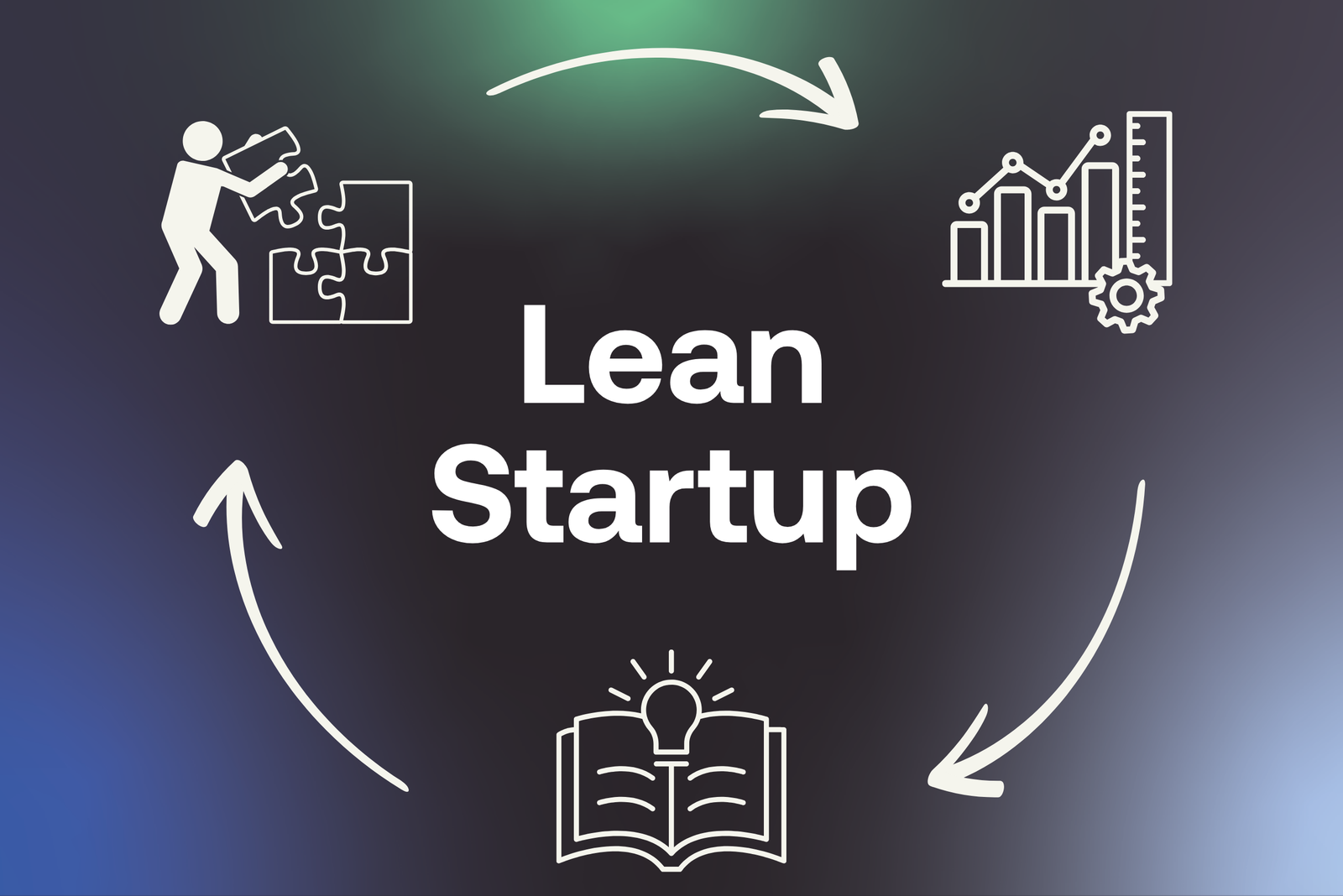
Photo by innoWerft
Mastering the Lean Startup Methodology: A Practical Guide for Modern Entrepreneurs
Every year, thousands of ambitious entrepreneurs launch new ventures with brilliant ideas, substantial capital, and endless enthusiasm. Yet, statistics consistently show that a staggering number of startups fail—not because they couldn’t build their product, but because they built something nobody actually wanted. Traditional business planning relies on long, rigid forecasts, heavy upfront spending, and rigid execution plans that rarely survive first contact with real customers.
The Lean Startup methodology offers a smarter, more adaptive alternative. Pioneered by Eric Ries and built on decades of entrepreneurial wisdom, this framework shifts the focus from writing exhaustive business plans to continuous experimentation, rapid prototyping, and customer validation. Whether you are bootstrapping a tech venture in Bengaluru or scaling a service business globally, understanding this approach helps you minimize financial waste, optimize resource allocation, and build products customers genuinely love.
What is the Lean Startup Methodology?
At its core, the Lean Startup methodology is a scientific approach to creating and managing startups. It helps entrepreneurs get products to customers faster while reducing wasteful spending on unproven assumptions. Instead of treating a startup like a scaled-down version of a large company, it treats a startup as an institution designed to navigate extreme uncertainty.
Traditional management focuses on operational efficiency and executing fixed plans. Lean management focuses on learning what works through validated insights. By treating every business hypothesis as an experiment, founders can test their core assumptions before committing massive amounts of capital.
The Core Pillars of Lean Startup
To master this framework, you must understand its three foundational pillars:
1. The Build-Measure-Learn Feedback Loop
The engine of a lean startup is a continuous cycle turning ideas into products, measuring how customers respond, and learning whether to pivot or persevere.
-
Build: Create a basic version of your solution as quickly as possible.
-
Measure: Track how real users interact with it using concrete data.
-
Learn: Analyze the data against your initial hypotheses and decide your next strategic move.
2. Validated Learning
Startup success is not measured by vanity metrics like total lines of code written or months spent in development. Instead, success is measured by validated learning—the empirical proof that your business model is viable and that customers are willing to pay for your solution.
3. Innovation Accounting
To improve entrepreneurial outcomes and hold innovators accountable, you need a new kind of accounting. Innovation accounting involves establishing milestone metrics, prioritizing actionable metrics over vanity metrics, and evaluating progress objectively.
Step-by-Step Guide: Implementing the Build-Measure-Learn Loop
Executing the lean framework successfully requires a disciplined, step-by-step approach.
Step 1: Identify Your Core Hypotheses
Every new business is built on two primary assumptions: the value hypothesis (does your product deliver value to customers?) and the growth hypothesis (how do new customers discover your product?). Write these down clearly before writing a single line of code or signing vendor contracts.
Step 2: Build a Minimum Viable Product (MVP)
Do not build a fully featured product on day one. Instead, build a Minimum Viable Product (MVP)—the simplest version of your product that allows you to start the learning loop with the least effort and development cost. An MVP can be a landing page with an email sign-up, a clickable wireframe, or a basic service package.
Step 3: Define Metrics and Measure Engagement
Decide in advance what success looks like. If you are launching a SaaS tool, measure trial-to-paid conversion rates and active user engagement. If you are launching an e-commerce platform, track cart abandonment and repeat visits. Ensure your metrics are clear, accessible, and objective.
Step 4: Pivot or Persevere
Once you have measured user behavior, analyze the results. If your core hypothesis is validated, persevere by optimizing and scaling your product. If the data shows your assumptions were flawed, it is time to pivot—making a structured course correction (such as changing your target audience, pricing model, or core feature set) without abandoning your overarching vision.
Real-World Examples & Business Case Studies
Dropbox: Validating Demand Before Writing Code
When Drew Houston founded Dropbox, cloud storage was notoriously clunky. Instead of spending two years building complex synchronization software, he recorded a simple 3-minute video demonstrating how the product would work. He posted it on a tech enthusiast forum. Overnight, the waiting list exploded from 5,000 to 75,000 people. This validated the market demand instantly, proving the concept was worth building.
Zappos: Testing Inventory Risk Manually
Nick Swinmurn wanted to test whether people would buy shoes online without trying them on first. Instead of leasing a massive warehouse and buying millions of dollars in inventory, he visited local shoe stores, took photographs of the shoes, posted them online, and bought them at full retail price only when a customer placed an order. This scrappy MVP proved massive consumer demand with almost zero initial inventory risk.
Best Practices for Lean Success
-
Talk to customers constantly: Stage regular interviews, feedback sessions, and usability tests. Never assume you know what the customer wants without asking them directly.
-
Focus on speed over perfection: Shipping a good product today is infinitely better than shipping a perfect product next year.
-
Embrace failure as data: Every failed experiment eliminates a wrong path and brings you closer to product-market fit.
-
Keep your burn rate low: Conserve your capital during the early experimental phases so you have runway when it is time to scale.
Common Mistakes to Avoid
-
Building an MVP that is too complex: Avoid adding “just one more feature” before launching. If your MVP takes six months to build, it isn’t minimal.
-
Chasing vanity metrics: Do not let high website traffic or social media likes blind you to low actual sales and poor customer retention.
-
Ignoring customer feedback: Falling so deeply in love with your original idea that you ignore clear signals from the market that nobody wants it.
-
Pivoting too emotionally or too frequently: Give your experiments enough time to gather statistically meaningful data before changing direction.
Frequently Asked Questions (FAQs)
1. What is the difference between an MVP and a prototype?
A prototype is typically built to test internal feasibility, design aesthetics, or technical architecture. An MVP, on the other hand, is a functional product (even in its simplest form) released to real customers to initiate the Build-Measure-Learn feedback loop and test business assumptions.
2. Is the Lean Startup methodology only for tech startups?
Not at all. While popularized in the tech sector, the principles of rapid experimentation, validated learning, and customer feedback apply equally to traditional retail, manufacturing, consulting firms, restaurants, and financial services.
3. What does “pivoting” mean in business?
A pivot is a structured change in strategy designed to test a new fundamental hypothesis about the product, strategy, or engine of growth. Common types include zooming in on a specific feature, targeting a different customer segment, or shifting revenue models.
4. How do I know when I have achieved product-market fit?
You know you have achieved product-market fit when demand is organic, customers are using your product frequently without heavy marketing push, retention curves flatten out, and word-of-mouth referrals drive sustainable growth.
5. How does Lean Startup fit into traditional business accounting?
Lean accounting replaces traditional financial milestones with innovation accounting. It measures progress through validated learning milestones, cohort analysis, and customer acquisition cost (CAC) versus lifetime value (LTV) ratios rather than static quarterly budgets.
Conclusion
The journey from an ambitious concept to a thriving, scalable business is fraught with uncertainty. By adopting the Lean Startup methodology, you replace guesswork with scientific rigor, vanity metrics with actionable insights, and heavy upfront risk with agile experimentation. Whether you are validating a fresh business idea or transforming an established enterprise, building a culture of continuous learning is the ultimate competitive advantage in today’s fast-moving economy.
Connect with Pinehills Business Solutions
Ready to accelerate your entrepreneurial journey, optimize your business model, or drive sustainable growth? Partner with Pinehills Business Solutions for expert guidance in business consulting, brand strategy, digital transformation, modern AI solutions, and market expansion. Contact our team today to turn your vision into a scalable, market-leading reality.