
AI for Education: How Artificial Intelligence Is Transforming Learning
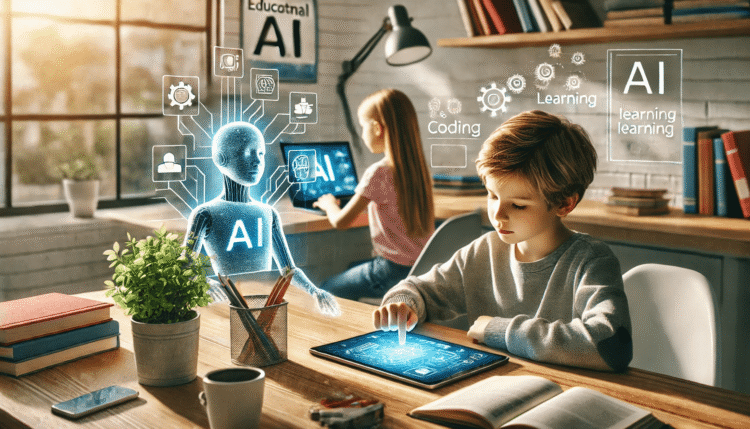
Photo by KF WebDesk
AI for Education: How Artificial Intelligence Is Transforming Learning
Artificial intelligence is changing education from a one-size-fits-all experience into a more personalised, accessible, and measurable journey. From students using AI tutors to businesses training employees through adaptive learning platforms, AI for education is becoming a practical tool rather than a distant concept.
For entrepreneurs, startup founders, schools, training providers, and business leaders, the opportunity is significant. AI can reduce repetitive administrative work, identify learning gaps early, improve course content, and help learners progress at their own pace. However, success does not come from simply adopting the latest tool. It comes from using AI responsibly, selecting the right use cases, and keeping human judgement at the centre of learning.
What Is AI for Education?
AI for education refers to the use of artificial intelligence technologies to improve teaching, learning, assessment, administration, and professional development.
These technologies can analyse learner behaviour, recommend suitable content, answer common questions, generate practice exercises, and provide real-time feedback. Common examples include:
-
AI tutoring assistants
-
Adaptive learning platforms
-
Automated quiz and assessment tools
-
Learning analytics dashboards
-
AI-powered language learning apps
-
Virtual teaching assistants
-
Content-generation tools for educators and trainers
The goal is not to replace teachers, trainers, or mentors. The best use of artificial intelligence in education is to support them with better insights, time-saving workflows, and more personalised learner experiences.
Why AI for Education Matters to Businesses
Education is no longer limited to classrooms and universities. Businesses must continuously train employees, onboard new hires, build digital skills, and help teams adapt to changing market demands.
For Indian businesses, this need is especially relevant. Fast-growing companies often operate with distributed teams, varied language preferences, and limited time for classroom-based training. AI-powered learning can make training more scalable and flexible.
Key Business Benefits
AI for education can help organisations:
-
Personalise training for different roles and skill levels
-
Reduce the time spent creating standard learning materials
-
Track progress and identify skill gaps
-
Improve employee onboarding
-
Support remote and hybrid teams
-
Offer learning support outside normal working hours
-
Build a stronger culture of continuous learning
For example, a sales team can use an AI learning platform to practise product pitches, receive feedback on objections, and access short lessons based on individual performance. This is more targeted than asking every employee to complete the same generic training module.
How AI Is Being Used in Education Today
Personalised Learning Paths
Traditional courses often assume that every learner starts at the same level. AI changes this by adapting content based on a learner’s performance, pace, and areas of difficulty.
If a student understands basic accounting but struggles with cash-flow management, an AI platform can recommend targeted lessons and exercises. Similarly, an employee learning digital marketing may receive extra guidance on analytics if their quiz results reveal a gap in that area.
AI Tutors and Learning Assistants
AI tutors can provide immediate support when a teacher or trainer is unavailable. They can explain concepts in simpler language, create examples, ask practice questions, and guide learners through a topic.
Language-learning platforms such as Duolingo have demonstrated how adaptive technology can make practice more engaging. In business settings, an internal AI assistant can answer common questions about policies, software tools, or onboarding processes.
Automated Assessment and Feedback
AI can assist with routine assessments, quizzes, and first-level feedback. This saves time for educators and trainers, allowing them to focus on complex feedback, coaching, and learner motivation.
For instance, an AI tool may flag repeated grammar errors in a written assignment or identify weak areas in a compliance-training quiz. A human reviewer should still make final decisions where grades, recruitment, certification, or performance management are involved.
Content Creation for Teachers and Trainers
AI can help create lesson outlines, quizzes, case studies, summaries, presentation drafts, and role-play scenarios. This is particularly useful for small training teams and startups that need to develop content quickly.
The important point is quality control. AI-generated material should always be reviewed for factual accuracy, relevance, bias, and alignment with the organisation’s learning objectives.
A Step-by-Step Approach to Implementing AI for Education
1. Identify a Clear Learning Problem
Start with a business or learner challenge, not a tool. Examples include slow employee onboarding, poor course completion rates, inconsistent training delivery, or a shortage of personalised student support.
2. Choose a Focused Pilot
Run a small pilot with one team, course, or learner group. For example, use an AI-based quiz and feedback tool for new sales hires over 30 days.
3. Define Success Metrics
Measure outcomes that matter. These may include:
-
Course completion rates
-
Time to competency
-
Assessment improvement
-
Learner satisfaction
-
Reduction in trainer workload
-
Employee productivity after training
4. Train Educators and Managers
AI adoption works best when teachers, trainers, and managers understand both the benefits and limitations of the system. Give them clear guidance on using outputs responsibly.
5. Review, Improve, and Scale
Use pilot feedback to improve content, workflows, and governance. Expand only after the tool has demonstrated real value.
Practical Examples of AI in Education
A coaching institute can use AI to create personalised revision plans for students based on mock-test performance. Instead of receiving the same revision schedule, each student focuses on the chapters where improvement is needed.
A small business can use AI to build a structured onboarding journey for new employees. The system can provide role-specific learning modules, answer routine questions, and remind managers when learners need support.
Large learning platforms, including Coursera and LinkedIn Learning, use recommendation systems to suggest relevant courses based on a learner’s interests, role, and past activity. Businesses can apply the same principle internally to create more relevant employee development programmes.
Best Practices for AI in Education
-
Keep educators, trainers, and managers accountable for final decisions.
-
Use AI to support learning, not to automate every interaction.
-
Protect learner data and use secure, trusted platforms.
-
Be transparent when learners are interacting with AI.
-
Review AI-generated content before publishing or assessing learners.
-
Check for bias, inaccurate information, and inappropriate recommendations.
-
Create clear policies for responsible AI use and academic integrity.
-
Start small, measure outcomes, and scale gradually.
-
Ensure content is accessible for learners with different abilities and language needs.
Common Mistakes to Avoid
One common mistake is adopting an AI tool without a defined learning objective. Technology alone cannot solve poor training design or unclear business goals.
Another mistake is treating AI output as fully accurate. AI can make errors, produce outdated information, or miss important context. Human review remains essential.
Businesses should also avoid collecting more learner data than necessary. Privacy, consent, and data security must be built into the implementation from the start.
Finally, do not use AI merely to cut costs. The strongest AI education strategies improve learning quality, learner confidence, and business performance at the same time.
Frequently Asked Questions
1. Can AI replace teachers and trainers?
No. AI can automate routine support and provide personalised practice, but teachers and trainers provide empathy, judgement, mentorship, and context that AI cannot reliably replace.
2. Is AI for education useful for small businesses?
Yes. Small businesses can use AI for onboarding, compliance training, product knowledge, customer-service training, and skill development without building large in-house learning teams.
3. How can schools and companies protect learner data?
Choose reputable platforms, collect only necessary information, set access controls, review privacy policies, and comply with applicable data-protection requirements.
4. What are the best first use cases for AI in education?
Start with low-risk, high-value uses such as quiz creation, learning-content drafts, learner FAQs, personalised practice, and training analytics.
5. How can educators prevent misuse of AI?
Set clear rules on acceptable use, teach learners how to verify outputs, redesign assessments where necessary, and focus on demonstrating understanding rather than simply submitting answers.
6. Does AI work for learners in multiple languages?
Yes. Many AI tools can translate, simplify, and localise content. However, organisations should review translations and examples to ensure cultural and technical accuracy.
Conclusion
AI for education is creating a more flexible and personalised way to learn, teach, and build professional capabilities. For students, it can provide timely support and practice. For businesses, it can make training more targeted, measurable, and scalable.
The most effective approach is practical and people-first: solve a real learning problem, pilot the right tool, protect data, measure results, and keep human expertise involved. Organisations that take this approach can use AI not just to modernise training, but to build stronger, more adaptable teams.
Connect with Pinehills Business Solutions
Looking to apply AI strategically in your organisation? Connect with Pinehills Business Solutions for business consulting, branding, marketing, digital transformation, AI solutions, and sustainable business growth.