
AI vs Human Creativity: How Businesses Can Win with Both
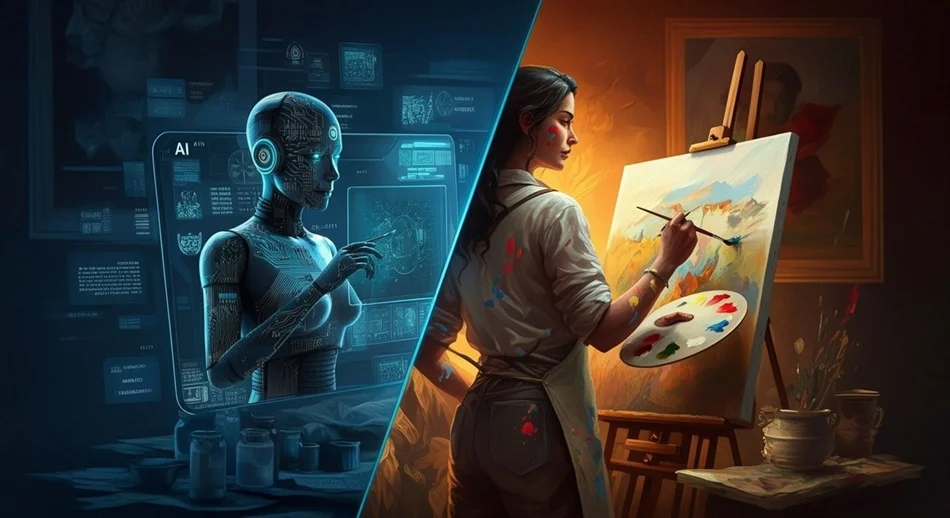
Photo by Muhammad Osama
AI vs Human Creativity: How Businesses Can Win with Both
The debate around AI vs. human creativity has moved beyond technology circles. It now matters to entrepreneurs, marketing teams, startup founders, freelancers, and business leaders deciding how work will be done in the years ahead.
AI can generate campaign ideas, social media captions, product descriptions, market summaries, and design concepts in seconds. This speed is valuable, particularly for lean teams. But creativity is more than producing content quickly. It involves judgment, empathy, cultural understanding, originality, ethics, and the ability to see meaning in a business challenge.
For businesses, the question is not whether AI will replace human creativity. The more useful question is: how can AI and people work together to create better outcomes? The strongest businesses will use AI to improve efficiency while relying on human insight to build trust, relevance, and lasting brands.
Understanding AI vs Human Creativity
What AI Does Well
Artificial intelligence identifies patterns from large volumes of existing data and uses those patterns to generate useful outputs. Generative AI tools can help teams create drafts, concepts, images, summaries, scripts, reports, and customer responses.
In a business setting, AI is especially useful for:
-
Producing first drafts quickly
-
Brainstorming multiple campaign angles
-
Analysing customer feedback at scale
-
Repurposing content for different channels
-
Creating variations of ad copy
-
Supporting research and competitive analysis
-
Automating repetitive marketing tasks
For example, an Indian direct-to-consumer skincare startup can use AI to generate 20 product-caption ideas for Instagram, organise customer reviews into themes, and draft email subject lines for a festive sale. This can save time and help a small marketing team focus on higher-value decisions.
What Human Creativity Does Better
Human creativity connects ideas to real people, emotions, culture, and business purpose. It is shaped by lived experience, intuition, values, and context.
A human strategist can understand why a particular message may resonate with customers in Bengaluru but feel irrelevant in Jaipur. A founder can recognise a customer problem that is not yet visible in market data. A designer can create a visual identity that reflects a brand’s personality rather than simply following familiar patterns.
Human creativity is essential for:
-
Building authentic brand stories
-
Understanding customer emotions
-
Making ethical and reputational decisions
-
Challenging conventional thinking
-
Reading cultural and local context
-
Developing original points of view
-
Taking responsibility for final business choices
AI can suggest ideas. People decide which ideas deserve to exist.
Why the Best Business Model Is Collaboration, Not Competition
AI and human creativity are most effective when they play different roles in the same workflow. AI brings scale, speed, and structure. Humans bring direction, taste, accountability, and insight.
Think of AI as a capable junior research and production assistant. It can accelerate the work, but it should not independently define the strategy.
A Practical AI-Human Workflow
Businesses can use this five-step process:
-
Set the business objective.
Define the outcome first: more qualified leads, stronger brand awareness, improved customer retention, or a faster product launch. -
Use AI to explore options.
Ask AI to generate campaign concepts, audience questions, content outlines, competitor comparisons, or messaging variations. -
Apply human judgment.
Review outputs for accuracy, relevance, tone, cultural fit, and alignment with the brand. -
Add original expertise.
Include customer stories, founder insights, industry experience, local context, and a clear perspective that competitors cannot copy. -
Test and improve.
Track results, learn from customer responses, and refine the campaign. AI can help analyse performance, but people should interpret what the results mean.
Practical Business Examples
Marketing: Faster Campaign Development
A boutique digital agency may use AI to create a first draft of a campaign calendar. The strategist then refines it based on the client’s target market, seasonal trends, brand voice, and sales priorities.
The result is not “AI-generated marketing.” It is human-led marketing delivered more efficiently.
Product Innovation: Better Customer Insight
Large companies such as Netflix and Amazon use data and algorithms to understand preferences and recommend relevant products or content. However, their long-term success also depends on human teams making decisions about product experience, storytelling, pricing, and customer trust.
Smaller businesses can apply the same principle. A restaurant chain can use AI to review customer feedback, identify common complaints, and detect popular menu items. The owner or operations manager must still decide how to improve the guest experience.
Branding: Consistency Without Losing Personality
AI can help create brand guidelines, draft content themes, and ensure consistent language across channels. But a brand’s voice should come from its values and customers—not from a generic prompt.
For example, a financial advisory firm should not use AI-generated content without expert review. Trust, compliance, clarity, and accuracy matter more than publishing speed.
Best Practices for Using AI Creatively
-
Start with a clear strategy before choosing AI tools.
-
Use AI for drafts, research support, and idea generation—not unquestioned final output.
-
Create a documented brand voice that every AI-assisted piece must follow.
-
Fact-check claims, statistics, competitor references, and legal or financial statements.
-
Protect confidential customer, employee, and business data.
-
Add personal examples, opinions, and subject-matter expertise to important content.
-
Review for bias, insensitive language, and cultural mismatch.
-
Measure business outcomes, not just content volume.
-
Train employees to use AI responsibly and confidently.
-
Keep a human accountable for every customer-facing decision.
Common Mistakes to Avoid
Treating AI Output as Final Copy
AI-generated content can sound polished while still being inaccurate, repetitive, or off-brand. Always edit before publishing.
Using Generic Prompts
A vague prompt produces vague results. Give AI context: your audience, objective, product, tone, location, constraints, and desired action.
Ignoring Privacy and Confidentiality
Do not enter sensitive client data, financial information, private customer details, or confidential strategy documents into public AI tools without appropriate safeguards.
Chasing Volume Instead of Value
Publishing more blogs, ads, or social posts does not automatically create growth. Focus on usefulness, relevance, and conversion.
Losing the Human Voice
If every message sounds the same, customers notice. Add real stories, original observations, and a point of view that reflects your business.
Frequently Asked Questions
Can AI replace human creativity?
AI can automate parts of the creative process, but it cannot fully replace human judgment, empathy, lived experience, or accountability. The most valuable work combines both.
Is AI-generated content good for SEO?
It can support SEO when it is accurate, useful, original, and reviewed by knowledgeable people. Search performance depends on quality and reader value, not simply how content was produced.
How can small businesses use AI effectively?
Small businesses can use AI for customer research, first-draft content, email ideas, social media planning, data summaries, and workflow automation. Start with one practical use case and measure the result.
What should humans always review?
Humans should review customer-facing content, brand messaging, legal or financial claims, sensitive communications, strategic recommendations, and anything that could affect trust or reputation.
Does AI reduce originality?
It can if businesses rely on generic outputs. Originality improves when people use AI as a starting point and then add their own expertise, customer insight, and distinctive perspective.
Which teams benefit most from AI and human collaboration?
Marketing, sales, customer service, product development, operations, finance, HR, and leadership teams can all benefit when AI is used with clear goals and responsible oversight.
Conclusion
The AI vs human creativity conversation should not be framed as a battle. AI is excellent at speed, scale, pattern recognition, and producing first drafts. Human creativity remains essential for strategy, empathy, cultural intelligence, trust, ethics, and meaningful innovation.
For business leaders, the opportunity is clear: use AI to reduce routine work and expand possibilities, while empowering people to make better decisions and create stronger customer experiences. The companies that succeed will not be those that automate everything. They will be those that combine technology with thoughtful human leadership.
Grow Smarter with Pinehills Business Solutions
Pinehills Business Solutions helps businesses turn ideas into practical growth strategies. Connect with our team for business consulting, branding, digital marketing, digital transformation, AI solutions, and scalable business growth support.