Facebook Ads Guide: How to Build Campaigns That Drive Real Business Growth
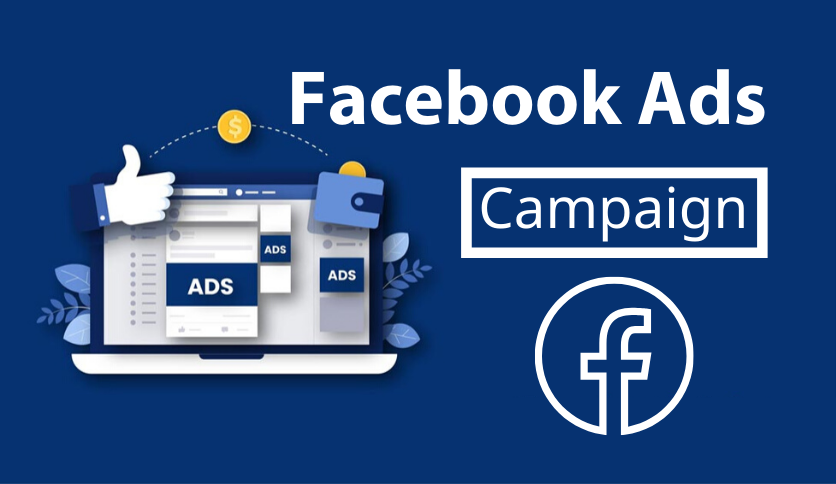
Photo by Arafat Hossain
Facebook Ads Guide: How to Build Campaigns That Drive Real Business Growth
For businesses competing for attention online, simply having a Facebook page is no longer enough. The real opportunity lies in reaching the right people, with the right message, at the right stage of their buying journey. This is where Facebook Ads become valuable.
Facebook advertising allows businesses to promote products, services, content, offers, and lead-generation campaigns to highly relevant audiences. It can be useful for a local retailer in India, a growing startup, an e-commerce company, a freelancer, or an established brand.
The opportunity remains significant. DataReportal reported that Meta’s advertising resources indicated approximately 403 million Facebook users in India in late 2025, although advertising reach figures should not be treated as identical to monthly active users.
However, successful Facebook advertising is not simply about spending money. It requires a clear objective, strong creative, sensible targeting, disciplined testing, accurate measurement, and continuous optimisation.
This Facebook Ads Guide explains how businesses can approach Facebook advertising strategically rather than treating it as a simple promotional tool.
What Are Facebook Ads?
Facebook Ads are paid advertisements distributed through Meta’s advertising ecosystem. Businesses create and manage campaigns through Meta Ads Manager, selecting objectives, audiences, budgets, placements, creatives, and conversion goals.
Depending on the campaign, advertisements can appear across Facebook and other Meta surfaces, including Instagram, Messenger, Reels, and Audience Network.
The key principle is simple:
Do not start with the advertisement. Start with the business objective.
For example:
- An online store may want sales.
- A consultant may want qualified leads.
- A new brand may want awareness.
- A local business may want WhatsApp enquiries.
- A startup may want website traffic.
Meta’s advertising system uses the campaign objective to optimise delivery toward people more likely to take the desired action.
Why Facebook Advertising Matters for Businesses
Facebook Ads can provide several strategic advantages.
Large Potential Audience
Facebook continues to have substantial reach in India and globally. This makes it relevant for businesses targeting both broad consumer markets and specific customer segments.
Flexible Budgeting
Businesses can begin with controlled budgets and increase investment when campaigns demonstrate sustainable economics.
A small retailer does not necessarily need a large advertising budget on day one. Testing with a manageable amount can reveal which offer, audience and creative combination deserves additional investment.
Audience Targeting
Meta provides different audience approaches, including broad audiences, custom audiences and lookalike-style strategies. Its current Advantage+ audience system can also expand beyond audience suggestions when Meta predicts better results.
Measurable Performance
Businesses can evaluate metrics such as:
- Reach
- Impressions
- Click-through rate
- Cost per click
- Leads
- Cost per lead
- Purchases
- Return on ad spend
- Conversion rate
The important distinction is between vanity metrics and business metrics. A campaign generating thousands of clicks is not necessarily successful if those visitors never become customers.
How Facebook Ads Work
A typical Facebook advertising campaign has three major levels.
1. Campaign Level
This is where you define the broader business objective.
Examples include:
- Sales
- Leads
- Engagement
- Traffic
- Awareness
- App promotion
2. Ad Set Level
This is where you generally control factors such as:
- Audience
- Budget
- Schedule
- Placements
- Conversion location
- Optimisation settings
3. Ad Level
This is the actual advertisement customers see.
It may contain:
- Image
- Video
- Primary text
- Headline
- Call-to-action
- Landing-page destination
Understanding this structure makes campaign management much easier.
Step-by-Step: How to Create a Facebook Ads Campaign
Step 1: Define Your Business Goal
Avoid starting with:
“How much should I spend?”
Start with:
“What business result do I need?”
For example:
A coaching business wants 50 qualified consultation enquiries per month.
That objective is considerably more useful than simply saying:
“I want more Facebook followers.”
Step 2: Identify Your Ideal Customer
Create a practical customer profile.
Consider:
- Age range
- Location
- Customer needs
- Buying behaviour
- Pain points
- Budget
- Decision-making process
- Existing relationship with your business
For an Indian local business, location targeting can be particularly important.
A restaurant in Jaipur does not need to advertise equally to customers in every Indian state.
Step 3: Choose the Right Campaign Objective
Match the objective to the business outcome.
For example:
| Business Goal | Suitable Direction |
|---|---|
| Generate enquiries | Leads |
| Sell products | Sales |
| Increase website visits | Traffic |
| Build brand visibility | Awareness |
| Encourage interactions | Engagement |
The objective should reflect what you ultimately want customers to do.
Step 4: Develop the Creative
Creative quality can strongly influence campaign performance.
A good advertisement should communicate three things quickly:
Problem → Solution → Action
For example:
“Struggling to manage monthly business accounts? Get professional accounting support from experienced consultants.”
Then provide a clear call-to-action.
Use a combination of:
- Short videos
- Product demonstrations
- Customer testimonials
- Educational content
- Before-and-after examples
- Offers
- Founder-led content
- Problem-solution advertisements
Meta’s current Advantage+ creative tools can automatically generate or optimise certain creative variations, including image, video and text enhancements.
Automation can help, but it should complement—not replace—good marketing strategy.
Step 5: Set a Sensible Budget
There is no universal “best” Facebook Ads budget.
Your budget should depend on:
Customer acquisition economics + market size + conversion rate + business objective.
For example, suppose:
- Product price = ₹2,000
- Gross contribution available for acquisition = ₹800
- Target acquisition cost = ₹400
A campaign producing customers at ₹250 may be attractive.
A campaign producing customers at ₹900 requires investigation, regardless of how many impressions it generates.
Step 6: Use Appropriate Placements
Meta’s Advantage+ placements can automatically distribute advertisements across available Meta placements based on opportunities for results.
Rather than assuming one placement will always perform best, test the system’s broader distribution against your campaign data.
Creative should also be designed to work across different formats.
Step 7: Track Conversions
Tracking is one of the most overlooked parts of Facebook advertising.
If someone clicks an advertisement and purchases your product, you should be able to understand that journey as accurately as possible.
For website campaigns, businesses should consider appropriate Meta measurement tools and analytics systems.
UTM parameters can also help identify campaign traffic inside Google Analytics. Google recommends consistent use of parameters such as utm_source, utm_medium and utm_campaign.
Practical Facebook Ads Examples
Example 1: Local Retail Business
A cosmetics retailer wants more customers from a specific city.
Instead of promoting:
“Visit our shop!”
The business could create:
“New skincare collection now available. Visit our store this weekend and explore products selected for everyday Indian skincare needs.”
The campaign could target customers within the relevant geographic area and measure enquiries, store visits where measurable, or message conversations.
Example 2: B2B Consulting Company
A consulting firm wants business leads.
Rather than advertising a generic company introduction, it could offer:
“Free 20-minute Business Growth Assessment.”
The advertisement then directs interested business owners to a lead form or landing page.
The company should measure qualified leads, not simply form submissions.
Example 3: E-Commerce Brand
An online fashion brand can use product-focused creatives showing:
- Product details
- Lifestyle usage
- Customer reviews
- Limited promotions
- Product benefits
The business can then compare different creatives and optimise toward purchases rather than clicks alone.
Best Practices for Facebook Ads
1. Test Multiple Creatives
Do not rely on a single advertisement.
Test differences in:
- Opening hook
- Image
- Video
- Headline
- Offer
- Call-to-action
2. Keep the Message Customer-Centred
Talk about the customer’s problem before talking extensively about your company.
Instead of:
“We are a leading digital marketing company.”
Try:
“Not getting enough qualified enquiries from your digital marketing?”
The second message immediately addresses a customer problem.
3. Use Strong Landing Pages
A great advertisement cannot compensate for a poor landing page.
Check:
- Page speed
- Mobile usability
- Clear headline
- Relevant offer
- Trust signals
- Simple enquiry process
- Strong CTA
4. Use First-Party Customer Data Responsibly
Existing customer information can support remarketing and audience strategies where appropriate and permitted.
Meta’s current lead-generation guidance also emphasises first-party data and CRM integration for improving lead quality.
5. Optimise for Business Outcomes
Track:
Ad Spend → Leads → Qualified Leads → Customers → Revenue → Profit
This gives management a much clearer view than focusing exclusively on CTR or impressions.
Common Facebook Ads Mistakes
Mistake 1: Boosting Every Post
Boosting a post is not automatically a complete advertising strategy.
Use Ads Manager when you need greater control over objectives, audiences, measurement and optimisation.
Mistake 2: Targeting Everyone
A broad audience is not necessarily bad, but an undefined strategy is.
Know who you want to acquire and why.
Mistake 3: Changing Campaigns Too Frequently
Constantly editing campaigns makes meaningful performance analysis difficult.
Allow sufficient data to accumulate before making major decisions.
Mistake 4: Focusing Only on Cheap Clicks
Cheap traffic can still produce expensive customers.
Evaluate cost per qualified lead, customer acquisition cost and revenue.
Mistake 5: Ignoring Creative Fatigue
An advertisement that performs well today may weaken as the same audience sees it repeatedly.
Refresh creative regularly when performance and audience signals indicate fatigue.
Mistake 6: Sending Traffic to a Poor Website
If the landing page is confusing, slow or irrelevant, increasing advertising spend may simply increase wasted traffic.
Facebook Ads Best Practices Checklist
- Define the business objective before creating the campaign.
- Build a clear customer profile.
- Match the campaign objective to the desired action.
- Test multiple creative concepts.
- Make advertisements mobile-friendly.
- Use clear calls-to-action.
- Consider broader automated targeting where appropriate.
- Track conversions accurately.
- Use consistent UTM naming.
- Evaluate qualified leads and revenue.
- Monitor customer acquisition cost.
- Test before aggressively scaling.
- Refresh creative when performance declines.
- Review campaign data regularly.
- Connect advertising performance with overall business economics.
Frequently Asked Questions
1. How much does Facebook advertising cost?
There is no fixed price. Costs depend on factors such as audience, competition, objective, creative quality, geography and conversion performance.
2. Is Facebook Ads suitable for small businesses?
Yes. Small businesses can use controlled budgets to test local, regional or niche campaigns before increasing investment.
3. What is the best Facebook Ads objective?
There is no universal best objective. Choose the objective that most closely represents the business result you want Meta to optimise toward.
4. How long should a Facebook Ads campaign run?
There is no universal timeframe. Campaign duration depends on budget, conversion volume, sales cycle and statistical confidence. Avoid making major decisions based on very limited data.
5. Are Facebook Ads better than organic Facebook marketing?
They serve different purposes. Organic content builds ongoing presence and relationships, while paid advertising provides additional reach and controlled distribution.
6. Should businesses use Facebook Ads and Instagram Ads together?
Often, yes. Both are part of Meta’s advertising ecosystem, and broader placements can give the delivery system more opportunities to find potential customers.
7. How can I improve Facebook Ads performance?
Start with the fundamentals: improve the offer, creative, audience strategy, landing page and tracking. Do not assume increasing the budget will solve a weak campaign.
Conclusion
Facebook Ads should not be treated simply as a way to “get more likes” or generate cheap clicks. They are a performance marketing system that can support customer acquisition, lead generation, sales and brand growth when managed strategically.
The strongest campaigns begin with a clear business objective. They then connect the right audience, relevant creative, compelling offers, appropriate landing experiences and reliable measurement.
For Indian businesses in particular, Facebook remains a significant advertising channel, with Meta’s advertising data indicating a potential reach of around 403 million users in India in late 2025.
The real competitive advantage, however, does not come from simply being present on Facebook. It comes from understanding why customers buy, what message motivates them, and which campaigns generate profitable business outcomes.
Connect With Pinehills Business Solutions
Ready to turn digital advertising into a structured growth strategy?
Pinehills Business Solutions helps businesses strengthen their business consulting, branding, digital marketing, digital transformation, AI adoption and growth strategies.
Connect with Pinehills Business Solutions to identify opportunities, build smarter marketing systems and create a practical roadmap for sustainable business growth.